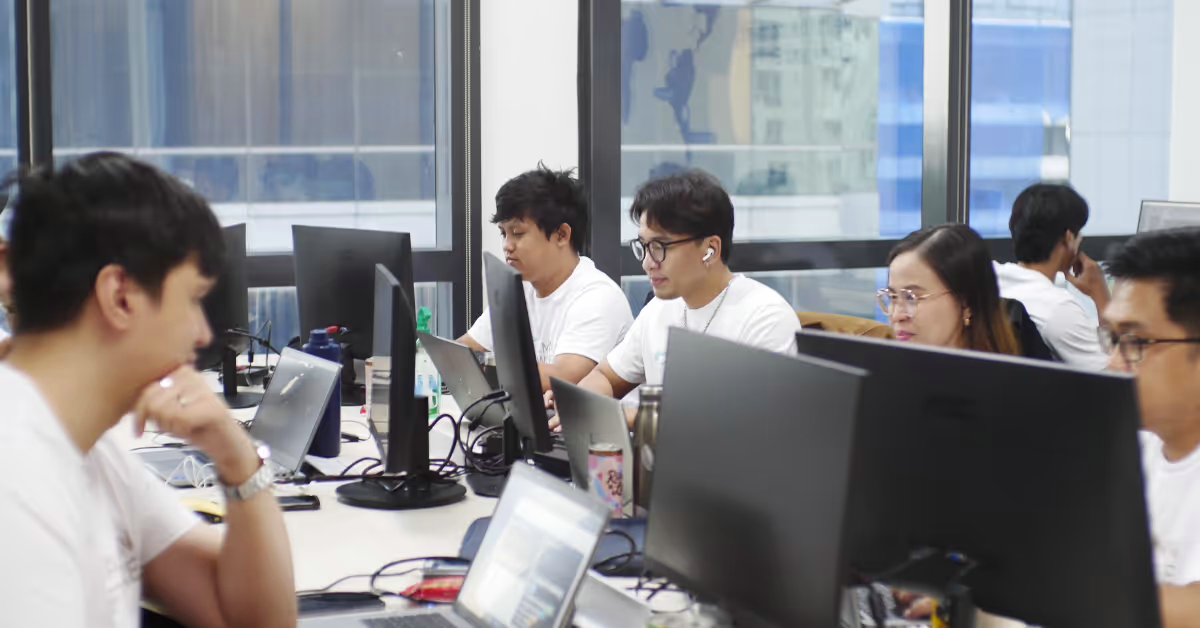





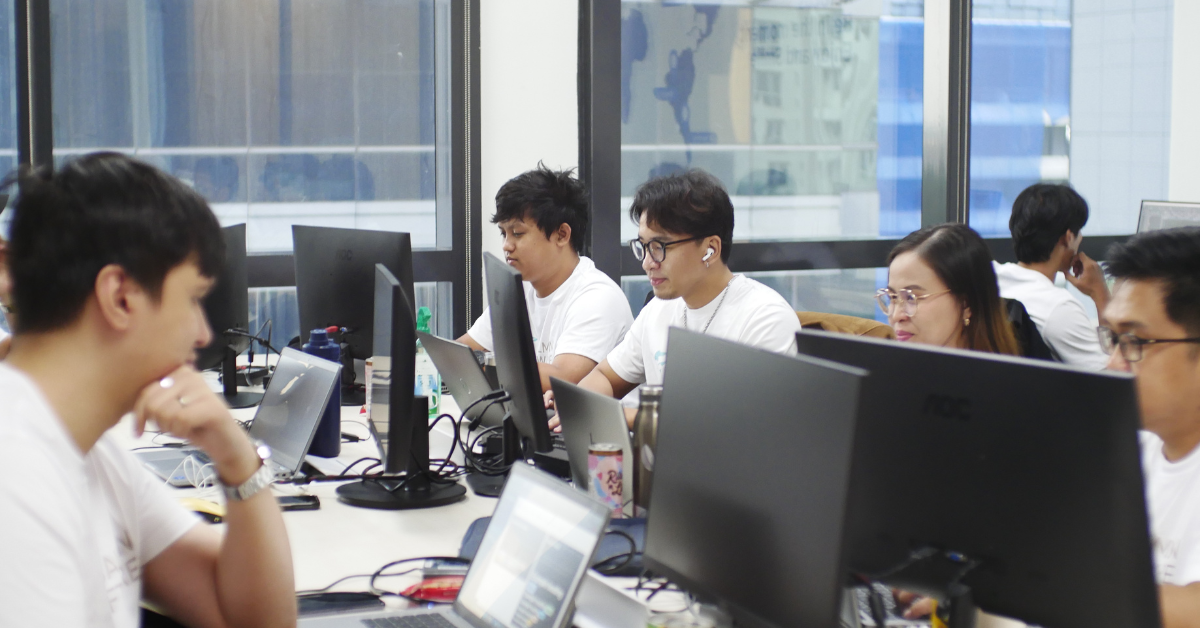
A hub born in BPO, raised on engineering
The Philippines’ journey to offshore software development powerhouse began in the early 1990s. The first major shift came when Accenture (then under Frank Holz) opened its Global Resource Center in 1992 (asiateloutsourcing.com). Initially driven by voice-based Business Process Outsourcing (BPO) - call centers, customer support - the country leveraged its English proficiency, cultural alignment with the US/UK, and government incentives (via PEZA, among others) to scale rapidly.
Demand moved on from voice and back-office work into knowledge process outsourcing: finance, legal, analytics. More recently, software development outsourcing has grown in both volume and sophistication, with Google, IBM, American Express and a long tail of fast-growing tech companies extending engineering, operations, data and design teams into the Philippines.
Cloud Employee has watched that evolution up close, working with thousands of Filipino developers over the years: strong computer science and engineering backgrounds paired with hands-on experience across modern full-stack work, cloud, mobile, DevOps, AI and ML, and data engineering. These are remote development teams in the full sense, not outsourced support. The market has matured to the point where its best engineers operate at or above the level UK organisations expect, fluent in agile practice, code review, CI/CD and test coverage, and comfortable collaborating asynchronously.
What was once an untapped market is now a cornerstone of talent strategy for global businesses building remote and dedicated teams.
Cost: the context that matters more than the rate card
Ask about offshore development in the Philippines and cost is the first thing anyone mentions. It deserves a fuller picture than a day-rate comparison.
- Base salary against all-in cost: a UK developer carries salary, employer National Insurance, pension, benefits, office or remote stipends, equipment, recruitment fees and ramp time. In the Philippines most of those overheads run lower, though doing it properly still means investing in on-the-ground support, retention, decent hardware and reliable connectivity.
- The size of the saving: in Cloud Employee's experience, all-in costs for a senior full-stack developer come out 50-75% below an equivalent UK hire, comparing engineers of similar seniority with the same expectations of code quality and collaboration. Because the developer is employed locally while you manage the work, and the provider carries HR, compliance and payroll, the hidden costs that sink offshore experiments largely disappear.
- Speed to productivity: cost is also time to value. UK hiring is slowed by market competition and long notice periods, while engineers used to remote workflows, async communication and aligned hours ramp noticeably faster.
- The cost of a wrong hire: a bad local hire, or an unvetted offshore one, costs rework, bugs and delay on top of wages. Serious vetting, technical assessment, references and cultural fit, is what keeps that risk down.
Quality: what sets Filipino developers apart, and how we protect it
Filipino talent: technical depth with cultural fit
Across thousands of working relationships, the pattern is consistent: top-tier Filipino developers match or beat global standards in three areas:
- English, written and spoken: design discussions, code reviews and client calls happen without translation friction, in a country where English is an official language.
- Adaptability: exposure to international clients means fluency across modern frameworks such as React, Node.js, Python and Go, the major clouds, microservices, containers and test-driven development.
- Cultural alignment: Western-style education, familiar working norms around process and transparency, and even shared media make integration into a British team straightforward.
What Cloud Employee does to make Philippine outsourcing deliver
- CTO-led vetting and technical oversight: our CTO, Anto Cabraja, brings a decade of senior development and remote leadership. He personally shapes what technical proficiency means per role and oversees assessments, pair programming and code review alongside our senior engineers.
- Embedding in your stack and processes: developers join your sprint rhythm, tools, CI pipelines and review culture, rather than sitting in a silo the way traditional offshore vendors arrange it.
- Support, training & retention: Continuous learning, mental health/wellness initiatives, local HR compliance, and benefits are all part of the support. Engineers are not treated like contractors dropping in then out, but as long-term team members.
- Feedback loops that prove it: clients describe our developers as proactive, positive, willing to push back, and part of the team. Those are the qualities that separate embedded engineers from vendor-model staff.
From our CTO, on the market:
“In my years working with Filipino developers, I’ve repeatedly seen engineers who not only match western peers in technical skills, but often in reliability and innovation. The challenge isn’t finding devs who can code - it’s finding ones who can think, communicate, take ownership and grow. In the Philippines, with the right vetting, culture and support, those devs are plentiful.”
Anto Čabraja
CTO at Cloud Employee
How different is it from hiring in the UK?
| Aspect | UK/USA Local Hiring | Outsourcing to the Philippines / Remote Staffing PH |
|---|---|---|
| Salary & Total Compensation | Much higher base salaries; high benefits, pension / social insurance, office costs, payroll taxes. | Lower salaries; benefits less costly; less overhead per person. |
| Speed of hiring | Often slow: notice periods, competitive market, lengthy interviews, scarcity for senior roles. | Faster, especially when working with a staffing/augmentation partner who has pools of vetted developers. Cloud Employee often places and onboards senior devs in under 2 weeks. |
| Talent availability | Some specialization gaps depending on geography; high competition. | Large talent pool; many devs with international exposure; more available candidates for AI, full-stack, mobile, cloud, etc. |
| Cultural / communication fit | Native fluency; shared time zones (in UK/USA) or close depending. | Ability to work across similar time zones with sufficient overlap; English fluency good; cultural norms align surprisingly well; remote working is often the norm. At Cloud Employee, devs will work to your timezone if that is preferable. Some businesses benefit from both synchronous and asynchronous delivery, staff augmentation with Cloud Employee offers both options. |
| Retention / loyalty | Local devs expect competitive benefits, with sometimes frequent job changes for career growth. | Philippino devs often show strong loyalty when treated well; cultural values around community, respect, and stability support retention. But attrition can still happen if not managed properly. |
| Risk related to remote / outsourcing | Easier oversight; physical proximity; in-person collaboration possible. | Risk of miscommunication; remote infrastructure quality; cultural misunderstandings; time zone delays. Mitigated by good processes - ensured by partnering with reputable staff augmentation providers like Cloud Employee. |
UK companies routinely pay double or more for equivalent capability. Outsourced development in the Philippines lets you scale without breaking payroll, provided you stay attentive to hiring standards, onboarding and management.
Why clients choose the Philippines, where models fail, and where we differ
The benefits beyond cost
- Scalability and flexibility: build a team quickly for a push, then resize or refocus without the fixed costs of permanent UK headcount.
- A diversified talent pool: senior and mid-level engineers across full-stack, back end, front end, AI, mobile and DevOps, many with years serving international clients.
- Communication without friction: English proficiency and cultural compatibility smooth code review, documentation and stakeholder work.
- Working hours that overlap: Cloud Employee developers work your time zone, so stand-ups, pairing and decisions happen live through the British working day.
- Retention, when people are treated properly: Filipino developers value stability and long-term relationships, and respond to support, growth and mentorship. Our average client engagement runs 2.7 years.
Why many offshore models fail
Most offshore failures trace back to developers who were never genuinely integrated. The recurring pitfalls:
- Poor vetting: the CV passes, the coding test would not have. Our answer: every engineer goes through CTO-led vetting with live pair programming before you ever meet them.
- Weak integration: contractors sit outside stand-ups, tools and daily process. Our answer: the talent success team embeds every developer into your tools and ceremonies as though hired in-house.
- Cultural misalignment: disconnected hires make collaboration clunky and morale fragile. Our answer: we recruit for cultural fit as deliberately as for skill, which is why 97% of our developers stay with clients beyond two years.
- No investment in people: without L&D and welfare, churn eats continuity. Our answer: every developer has a Talent Success Manager, HR support and an L&D lead behind them.
- Time zone isolation: minimal overlap stalls decisions. Our answer: hubs across the Philippines, LATAM and Croatia staffed to UK and US hours.
- Compliance and payroll risk: mismanaged contracts and benefits become the client's liability. Our answer: payroll, compliance, pensions and benefits are handled in full, in-country.
The difference is straightforward: where traditional models create friction, an embedded model integrates, and the team performs as though it were in-house at a cost and speed in-house cannot reach.
Where Cloud Employee tends to win
- Plug-in integration: developers are sourced, embedded and retained as part of your team, never treated as external contractors.
- CTO-led vetting: technical oversight that keeps the bar where you would set it yourself.
- Transparent cost: one monthly fee with legal, payroll, compliance, benefits and support inside it. You know what you pay, and the risk stays low.
- Speed: developers are frequently embedded within two weeks of the first conversation.
- Retention as a discipline: wellness, training, culture and local HR drive 97% retention beyond two years, which is the number that protects your codebase knowledge.
- Communication first: soft skills, proactive updates and ownership are selection criteria, not afterthoughts, which is why clients say our developers feel like part of the team.
Although they’re employed by Cloud Employee, the team here are a full part of Salmon. They are integral to what we’re doing over the next couple of years. For me, it’s key to make sure that harmony exists, that there is a great dynamic between all of our different offices.
Marcus Kilgour
CTO at Salmon Software
The honest challenges, and how to manage them
Hiring in the Philippines is not friction-free. The hurdles are real, and with awareness and a decent strategy, almost all of them are avoidable.
| Challenge | Why It Matters | Mitigation Strategies |
|---|---|---|
| Time Zone & Synchronization | If overlap is minimal, delays in feedback, less synchronous collaboration. | Ensure overlap windows are built in; schedule regular syncs; standard working hours that align with client core hours. Cloud Employee devs work to your timezone with synchronous and asynchronous options available depending on your needs. |
| Infrastructure & Connectivity | Internet outages, hardware issues can disrupt work. | Use providers that guarantee good infrastructure (power backup, reliable internet), provide hardware, and have redundancies. |
| Cultural Misunderstandings | Communication styles, decision making, feedback, hierarchy norms differ. | Early alignment on communication protocols, feedback style; cultural training; using culturally sensitive leadership. |
| Retention & Career Growth | Talented devs may switch jobs if growth is limited or compensation doesn’t match market shifts. | Invest in their growth: learning & development, mentorship, career ladders; offer competitive benefits/recognition. |
| Legal, Compliance & Payroll Complexities | Employment laws, taxes, insurance differ; missteps cost money and reputation. | Use a trusted partner that handles local contracts, payroll, compliance and legal obligations. |
| Quality Variation | Not all devs or providers are equal; risk of variable technical output. | Vet well: technical assessments, reference checks; insist on code quality, test coverage, peer review; use small pilot periods. |
Case study: Willo and Cloud Employee
From the Willo customer story:
- What Willo needed: development capacity scaled quickly without quality slipping.
- How it was delivered: fully embedded Filipino developers joined Willo's team, aligned to their stack, agile process and product culture, with onboarding measured in weeks.
- The results:
- Ten developers hired over four years in the Philippines, without a single site visit
- The first two engineers sourced and onboarded inside three weeks
- An estimated 825 hours of recruitment time saved
- Four years of continuous team support and developer training
Clients put it more plainly than we could:
I feel like the talent that we’ve got in the team here actually outshines our CTO and our tech lead over in the UK because they’re so good… tasks are often finished before I can write another task.
Sean, Mercato CEO
We spent four months trying to hire in the US. We engaged Cloud Employee and had two full-time developers onboarded in one week. The guys have been working with us for two years and we’re now up to a team of six.
Mark Whitfield, Managing Director at Cameron Pearson (read review)
The stories carry the same message: not only cost and speed, but quality, integration and people who stay.
Best practice for UK CTOs and CEOs considering the Philippines
If you are weighing remote staffing in the Philippines, outsourced development or dedicated offshore developers from a UK seat, these are the habits that separate successes from write-offs:
- Define the requirement precisely
Stack, seniority, domain knowledge and soft skills. Full-stack or back end? Which languages and tools? How much autonomy? - Insist on structured, CTO-led vetting
Technical assessment, coding challenges, pair programming and references, plus communication style, hours overlap and feedback preferences. - Embed from day one
Stand-ups, code reviews, retrospectives, and full access to documentation, tooling, CI/CD and design systems. - Invest in growth and retention
Skill development, feedback, a visible career path, competitive local benefits and mentorship. Strong HR support underneath it all. - Get the infrastructure right
Hardware, connectivity, backups, and both synchronous and asynchronous communication that actually work; provide stipends or kit where needed. - Start with a pilot
Validate process, working relationship, code quality and communication on something small before you scale. - Align on culture and norms early
Feedback style, decision-making, ownership and escalation paths, made explicit alongside expectations on quality, tests and documentation. - Let a partner carry compliance
Local employment law, contracts, insurance and benefits belong with a provider who does this daily, not with your ops team. - Measure outcomes, not inputs
Track deliverables, velocity, retention and code quality rather than staring at the hourly rate, and adjust when something is off.
The conclusion
For UK CTOs, CIOs and product leaders who need engineering capacity without compromising quality or detonating cost, the Philippines is one of the strongest options available in 2025 and beyond. The country has grown from a BPO hub into a mature source of senior, well-trained, culturally aligned engineers at a fraction of UK cost.
Models that treat remote developers as second-class or as pure cost centres are on their way out. What replaces them is staff augmentation and dedicated developers who are embedded, accountable and trusted as long-term members of the team.
Cloud Employee is among the providers doing this best: CTO-vetted talent, transparent cost, strong retention and deep experience with Filipino engineers. If you are considering the Philippines from the UK, do it with a strategy, a partner who cares and standards that match your own, and the return is not just savings but genuine competitive advantage.
FAQs
Why choose the Philippines for software development?
Strong English, cultural compatibility with British teams, and a deep pool of skilled developers across full-stack, cloud, mobile and AI make it one of the most reliable and cost-effective hubs for remote staffing.
How do costs compare with hiring in the UK?
Total savings typically run 50-70%. Salaries, benefits and overheads are all lower, while senior developers deliver to the standard a UK team expects. Cloud Employee also absorbs the hidden costs: compliance, payroll and HR.
How does Cloud Employee ensure quality?
Every developer passes CTO-led vetting with coding tests, live pair programming and cultural fit checks, then integrates straight into your workflows: stand-ups, code reviews and CI/CD.
How quickly can developers start?
Where a UK hire can take months, vetted senior developers are typically placed within weeks, and sometimes inside one, depending on the role.
What about retention and loyalty?
Supported with career growth and proper benefits, Filipino developers stay: retention at Cloud Employee runs above 97% beyond two years, which keeps teams stable and knowledge in the codebase.
Can UK companies hire developers in the Philippines?
Yes, and the UK is one of Cloud Employee's largest client markets. Developers work full UK office hours, and a UK-based account manager is your point of contact throughout.
Can we visit the team in the Philippines?
Yes. Cloud Employee has offices in Makati, Cebu and Clark and regularly hosts clients on site; hire four or more developers and the flights and accommodation for a visit are covered.
Do Filipino developers communicate directly with UK teams?
Directly and daily: your channels, your stand-ups, your code reviews. English is an official language, so nothing is lost through an intermediary.