
















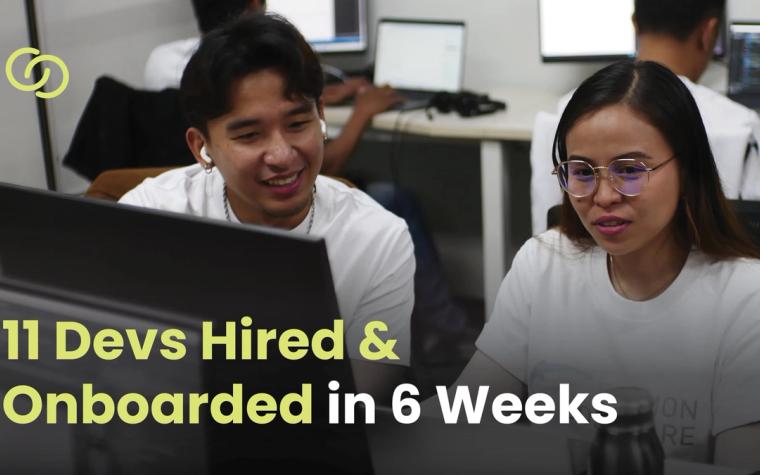


Our new developers were able to hit the ground running, we've worked with them for over two years now, and they are truly part of our team.
 Alison WhittleProduct Delivery Manager, BladeFS
In-house feel, nearshore
Hire senior TypeScript developers who work British hours, join your stand-ups and ship type-safe code from their first week.
 TypeScript Front EndsBack End APIsCodebase ModernisationTesting and CI/CDEnd-to-End Delivery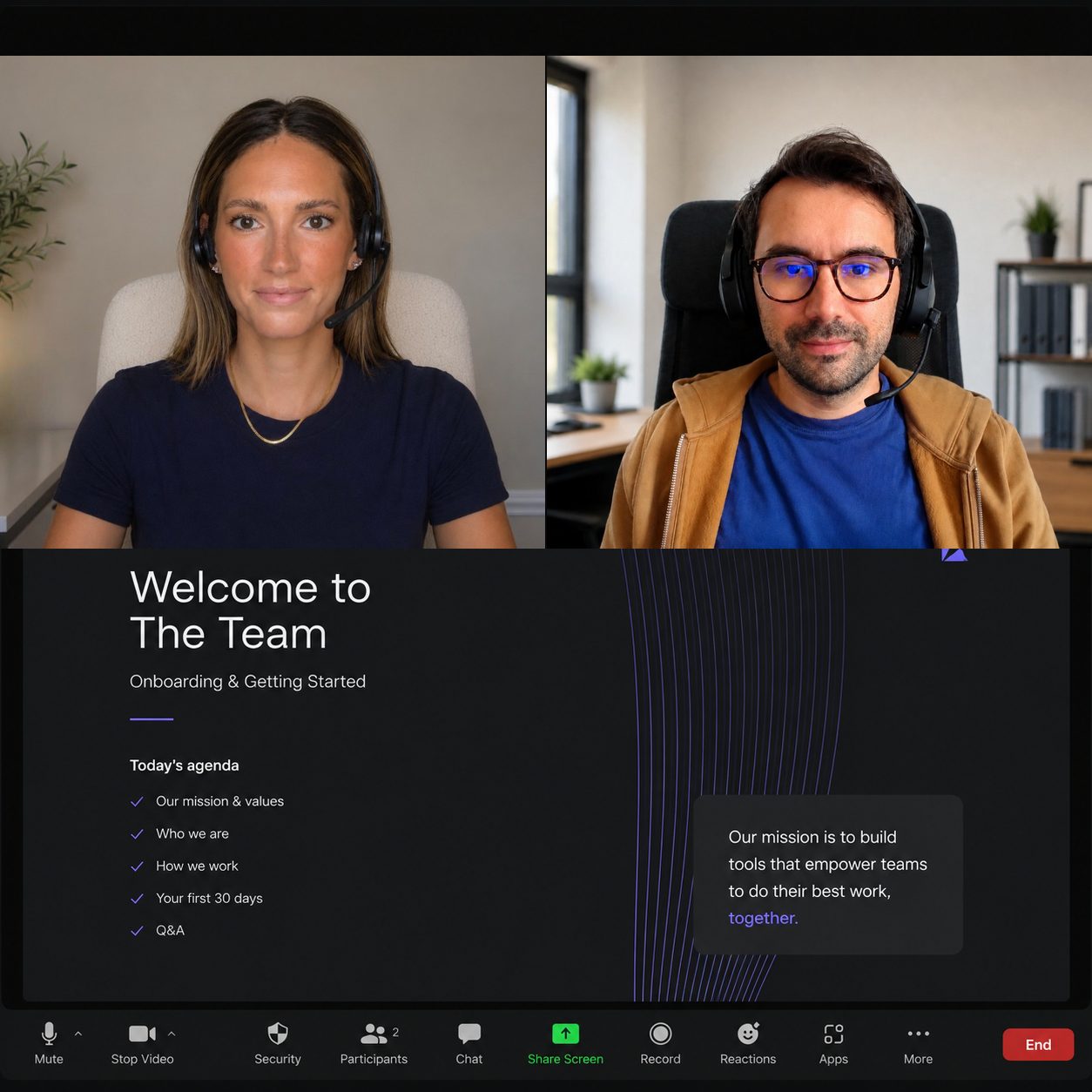
Our Service
We place experienced TypeScript engineers alongside your own developers, aligned to your stack, your standards and your roadmap. From React front ends to Node back ends they build with modern tooling and review their own work properly. Because Cloud Employee is the employer of record, you get a committed full-time engineer rather than a contractor, and the employment-status questions that come with UK freelance hiring do not arise.
Backed by delivery and people ops from day one


The alternative
Solid lime = yes · outline lime = partial · grey dash = no
Vetting
A senior engineer runs a live technical conversation on the candidate's real stack, not a recruiter working from a keyword list.
Real problems solved in front of an assessor, with anti-cheating checks. You see how they actually work, not what they submitted overnight.
Every candidate arrives with a CV, interview summary, coding-test breakdown and rate in pounds. You decide on evidence.
Every tab is a stage a candidate has to clear. Six of them, all run by our own internal engineers at Cloud Employee, before you see a name.
Scored by people. We use AI to cross-check our own consistency - never to decide who reaches your shortlist.
 ✓
✓Luka M.
VettedSenior TypeScript Engineer · TypeScript · React · Node · 6 yrs · Zagreb, Croatia (GMT+1)
Assessment
Six years in production Python, the last three on LLM systems - retrieval pipelines, eval suites, and agent tooling for UK fintech. Owns delivery end to end.
AI in practiceShips with Copilot and Claude Code daily, and rewrote 40% of the generated code in his observed task - the judgement is his, the tooling only makes him faster.
Career history
Senior AI Engineer
UK payments platform · 40-person product team
Built the retrieval assistant now resolving 30% of tier-1 tickets; owns its eval suite and guardrails.
Backend Engineer, Python
Travel booking SaaS · Zagreb
Moved fraud scoring onto a real-time feature pipeline; cut false declines by 18%.
Data Engineer
Agency · Python, Postgres, AWS
Technical interview
Assessed by Marco R., Principal Engineer
12 Jun 2026
55 min · live call
"Walked me through an assistant that was quietly hallucinating refund policy, how he caught it in evals, and what he got wrong on the first fix. Hire-ready for a senior seat."
Live coding test
Fix a type-unsafe data layer
88
score
retrieval.py · submitted diff
- hits = index.query(q, k=50)+ hits = index.query(rewrite(q), k=50, filter=tenant)+ hits = rerank(hits, q)[:8] # recall 0.62 -> 0.91+ assert_context_budget(hits, max_tokens=6000)
Psychometric · technical thinking
How he reasons under a real deadline - not a personality quiz.
Top 9%of engineers
we test
A 45-minute reasoning test, scored against the 4,000+ engineers we have already placed. Our assessors do the marking - AI only flags where our own scoring looks inconsistent.
Soft skills · working with your team
"He raised the payment edge case nobody else had spotted, in writing, two days before release."
This is what you receive - not a CV.
Ask our AI anythingWhy Cloud Employee?
We place engineers who know TypeScript and know how to work inside a fast-moving team. 97% stay beyond two years, supported by a £1,000 annual learning budget and dedicated Talent Success Managers, at 50-75% less than hiring the same seniority in the UK.

Not just a developer, a whole operation behind them
Fully supported
 Performance reviews
 Payroll & complianceEquipment
 Workspace
In-house, without the friction
Ready to find your engineer?
Two matched engineers in 7 days. No fees, no obligation.
Pick one to start - you'll see matching engineers at the end.
Got questions?
Usually between 50 and 75% below the full cost of a comparable British hire, once salary, employer national insurance, pension, recruitment fees and overheads are all counted. UK-based TypeScript developers are part of what we place. Most clients land in Eastern Europe, the Philippines or Latin America once they see the same calibre for less, and Eastern Europe fits a British working day almost exactly. TypeScript is now the default for serious web work, so almost every sector, from fintech to retail, competes for the same senior people. Contracts roll monthly with 30 days notice.
TypeScript is JavaScript with a type system on top. You describe what shape your data is meant to be and the compiler catches where it is not, before anything reaches a user. Teams adopt it at a predictable moment, once the codebase has grown past the point where anyone can safely refactor it. That reasoning has strengthened as more code is generated rather than typed, since types are how you check that confident-looking output fits the system it is joining. A model will happily produce something plausible; the compiler tells you whether it is true.
Systems first, code second. Knowing the syntax is a week's work and a model will write it for you. What separates candidates is whether they can model your domain in types rather than reaching for any to make an error disappear, and whether they understand what a change propagates to. Ask about generics, discriminated unions and where they would draw the line on strictness. Coding fundamentals remain essential, but they are now the entry requirement rather than the thing that makes someone valuable. Testing ability matters too.
Put badly typed real code in front of them and ask them to improve it, with their usual tools available including AI. You learn more in ten minutes of that than an hour of questions. Ask when they would use any and whether they have regretted it, how they would type an API response they do not control, and what they would migrate first in an untyped codebase. Then hand them generated code that type-checks but is subtly wrong, and see whether they catch it, because that is the actual job now.
TypeScript has become the default for serious JavaScript work, so demand is high and steady. Most established British codebases have migrated or are partway through. The market underneath has shifted though, because as tooling absorbs routine work, value has moved towards engineers who can design a system and judge what comes back, rather than those who simply produce code quickly. For a new project it is close to automatic, and the type system is arguably more useful now, since it is the cheapest way to verify code nobody wrote by hand.
Yes, and in a typed codebase the guardrails are unusually good, because the compiler catches a whole class of confident mistakes before review does. What we assess is judgement over the tooling rather than familiarity with it. That means treating generated code as a first draft, reviewing it as critically as a colleague's, and never committing something the engineer could not explain line by line. It also means recognising when a model has produced something that compiles and is still wrong for your domain, which types alone will not catch.
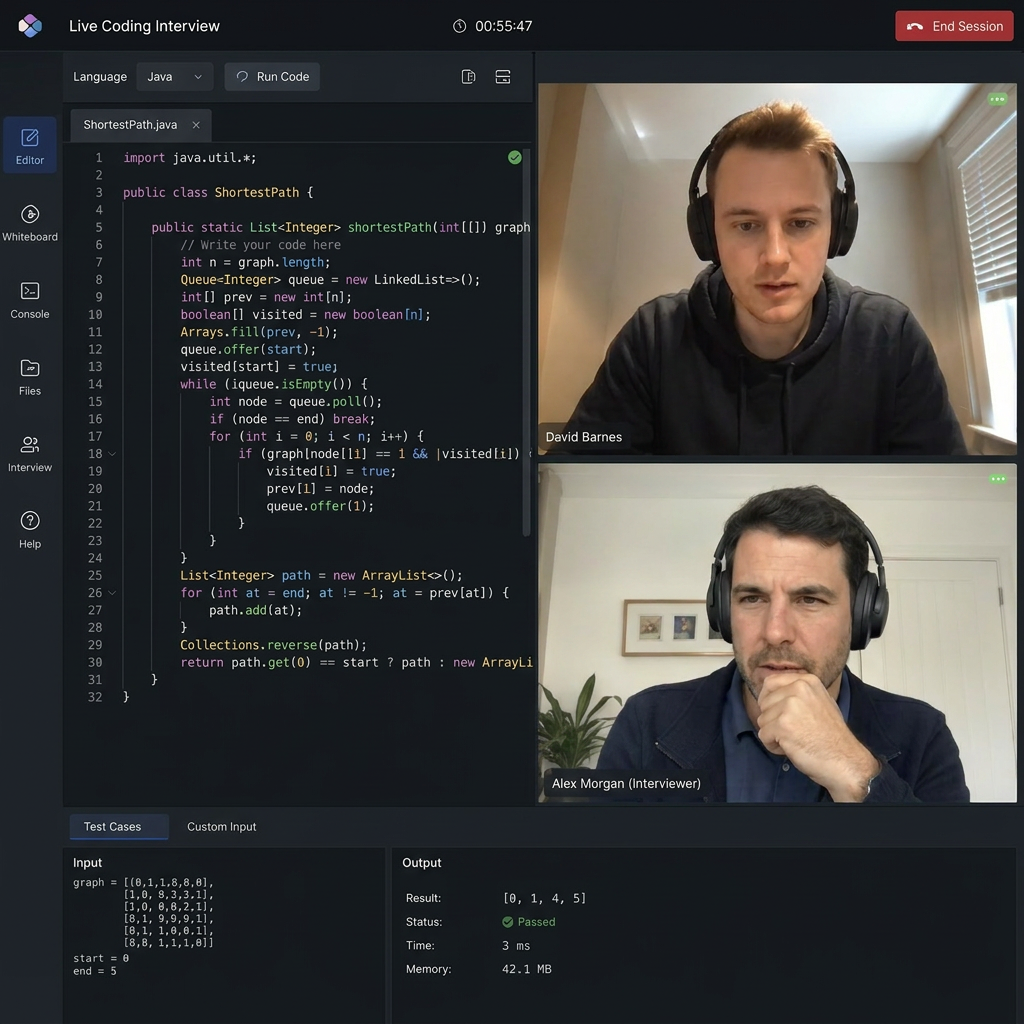
We use AI to augment our own hiring, screening and matching across a great deal of data, but the decision stays human, because recruitment is a human endeavour. Vetting is CTO-led rather than recruiter-driven, so a technical assessment on real typed code, live pair programming with a senior engineer, and a psychometric assessment built for software engineers specifically. In the pairing session we hand over weakly typed code and watch whether the candidate reaches for an escape hatch or models the problem properly, explaining the trade-off as they go.
You are typically interviewing matched candidates within 7 working days of a requirements call, and developers are often embedded and pushing code within about two weeks. From there it is a rolling monthly contract with 30 days' notice, one monthly fee, and no placement charges. You can scale up or down as the work changes, and you pay nothing to interview.
There is a two-week money-back guarantee, and if you want to continue we replace the developer free of charge. In practice this rarely comes up, because you interview a shortlist of two candidates who have already passed a CTO-led technical assessment and a live pair programming session, so the fit question is largely settled before anyone starts.
Proof, not promises
In their words
Our new developers were able to hit the ground running, we've worked with them for over two years now, and they are truly part of our team.
Alison WhittleProduct Delivery Manager, BladeFSWhat I love about Cloud Employee is that you have taken all of that hard work off my shoulders.
 Marcus KilgourCTO, Salmon Software
Working with Cloud Employee developers is great, because they're not afraid to push back. They're proactive, they're positive, and they feel like part of the team.
 Doran EskinaziHead of Engineering, Healthpointe
We actually hired the whole team remotely, having never met them. And we made a bunch of really good hires.
 Euan CameronCEO, Willo
Cloud Employee provides a level of professionalism, communication and support we haven't found elsewhere.
 Trevor SathorManaging Director, Square Eye
Working in tandem with Cloud Employee we have successfully released a major version of our main software product during a critical period for us.
 James StringerManaging Director, CleanLink