




Most Founders and CTOs have lived through the same moment.
A new engineer joins. The interview was strong. The CV checked out. But a few weeks in, delivery slows, communication frays, and senior engineers quietly step in.
Nothing is obviously “wrong” - but the cost is already there.
That gap between interview performance and day-to-day execution is what this hiring process is designed to close.
At Cloud Employee, pair programming interviews sit at the centre of our hiring engine. They show how engineers actually work together, not just how they present themselves. This is the exact process we use to achieve a 97% match rate for clients hiring global developers.
Why We Hire
Engineers This Way
Hiring signals have changed. CVs can be generated. Interviews can be rehearsed. Polish has increased - predictability hasn’t.
Most hiring failures don’t come from missing knowledge. They happen because interviews measure candidates in isolation, not how they operate inside a real team.
Pair programming lets us observe execution in context - not theory.
When developers hire developers, it stops being a performance exercise and starts looking like the job."
Seb Hall
Cloud Employee CEO
Why Pair Programming Sits
at the Centre of Our Hiring Engine
Pair programming sits between our custom coding assessment and the culture fit interview, and that placement is intentional.
By this stage, we already know a candidate can code. Pair programming shows how they work when the problem is real and unfolding live.
This is where you see what most processes miss: problem breakdown, trade-offs, collaboration, real tool usage (Git, IDEs, AI), and adaptability when the first approach fails.
That’s also why this isn’t an early-stage filter. Used too early, it’s noisy. Used here, it’s one of the strongest predictors of real on-the-job performance - especially in remote team
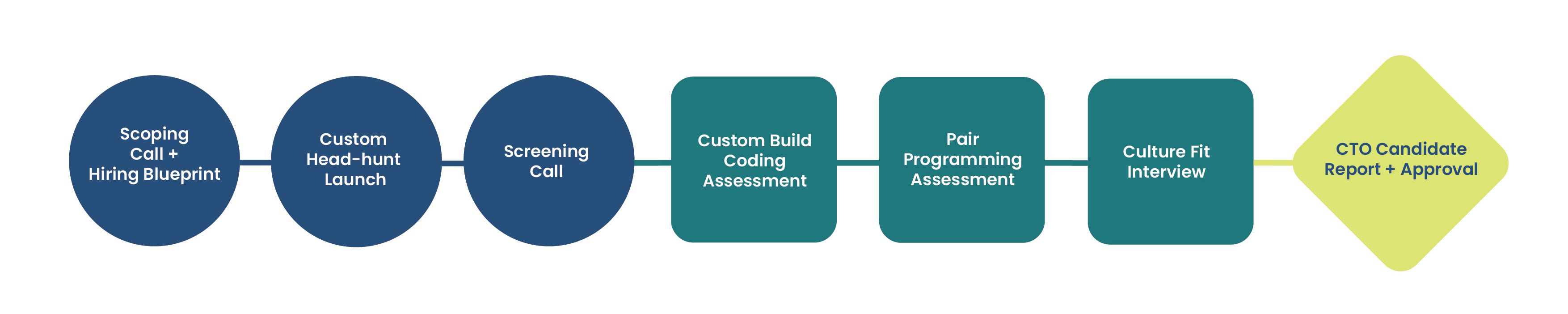
You can copy this hiring engine order - we encourage it!
Watch how our internal hiring process works in practice
Below is the step-by-step pair programming SOP we use as-well.
The Pair Programming Interview, Step by Step
1. Selecting the Task
We use realistic tasks: fixing a bug, refactoring code, extending a feature, improving a test.
No puzzles. No trick questions.
2. Environment Setup
We default to GitHub Codespaces with VS Code Live Share, with fallbacks ready.
Candidates receive:
- A Zoom link
- Repo access with a clear README
- One key line: “We’ll code together live. No trick questions.”
That alone changes the tone. The work starts to look like real work.
3. Pre-Session Preparation
Interviewers spend ~5 minutes reviewing:
- The role and company context
- The candidate’s background
- Prior interview notes or exercises
- Environment readiness
The goal is shared context - not deep research.
4. Running the Session
Every session follows the same basic structure
Set the context
We start by making one thing clear: this isn’t a test. The candidate should think out loud, ask questions, and treat the interviewer like a teammate. Good engineers can underperform when the tone feels harsh or overly evaluative - so we remove that pressure early.
Build together
The candidate drives. The interviewer navigates. We pay attention to how problems are approached, how code is structured, how tools are used, and how feedback is handled. The goal isn’t to watch someone perform - it’s to see how they collaborate when the work is real.
Reflect and review
This is often the most revealing part of the session. We ask questions like:
- How would you improve this for production?
- Any edge cases we missed?
- How would you test this?
- If you had more time, what would you clean up?
These answers show engineering maturity far better than speed ever could. The reflection often reveals more than the code itself.
How We Evaluate What We See
We score observation, not gut feel.
Pair Programming Evaluation (1–5):
| Class | Criteria | Score (1–5) | Notes (what to look for) |
|---|---|---|---|
| A | Problem-solving approach | Breaks down the task clearly. Logical thinking. | |
| B | Communication & clarity | Explains reasoning, asks good questions. | |
| C | Code quality & structure | Naming, readability, structure, separation of logic. | |
| D | Tool use (AI, Git, search) | Uses tools fluently. |
Scoring
- 30+ = Strong hire
- 24–29 = Discuss
- <24 = Fail
Interviewers score independently, then align.
Common Red Flags
Patterns matter more than single moments:
- No clarifying questions
- Defensiveness to feedback
- Inability to explain decisions
- Ignoring edge cases or tests
- Copying code without understanding
Executive Takeaway
Good hiring systems don’t try to impress - they try to be honest.
This process works because it looks like the job. It turns observation into a usable signal. For CTOs, that means fewer surprises after hire. For engineers, it’s a fairer way to show how they actually work.
If the interview doesn’t resemble the work, it won’t predict the outcome. That’s why pair programming sits at the centre of Cloud Employee’s hiring engine.
👉 Learn how we can design your team for both speed and resilience: How It Works
FAQs
Are pair programming interviews better than coding tests for hiring engineers?
Yes. Pair programming goes beyond coding tests by showing how engineers work with others, handle feedback, and make trade-offs, which are critical signals for Founders and CTOs building high-performing teams.
What should a modern hiring engine for hiring software engineers include?
A modern hiring engine should combine practical coding assessments, pair programming interviews, and culture-fit conversations to give Founders and CTOs a clear, behaviour-based signal of real on-the-job performance.