
















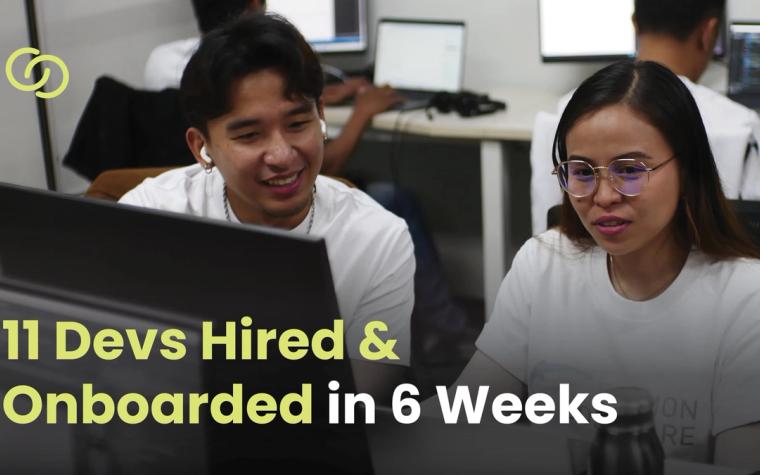

Our new developers were able to hit the ground running, we've worked with them for over two years now, and they are truly part of our team.
 Alison WhittleProduct Delivery Manager, BladeFS
In-house feel, nearshore
British product teams adopt GraphQL to give web and mobile one coherent contract with the backend. Done well it removes a whole class of coordination pain; done badly it merely relocates it. We embed engineers who have shipped schemas, resolvers and federated graphs that teams enjoy working against.
 Resolver DevelopmentFederation and GatewayPerformance and CachingTooling and DX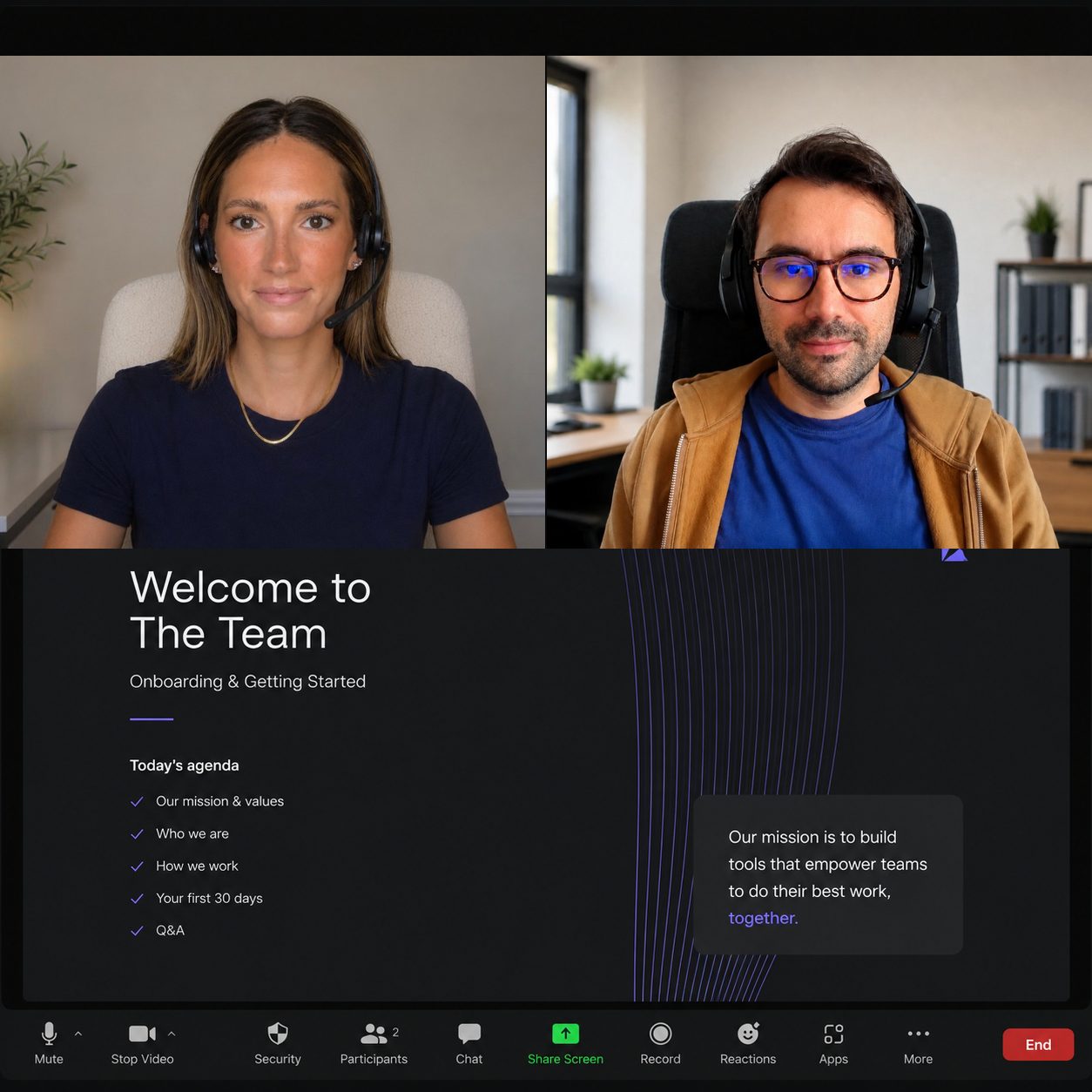
Our Service
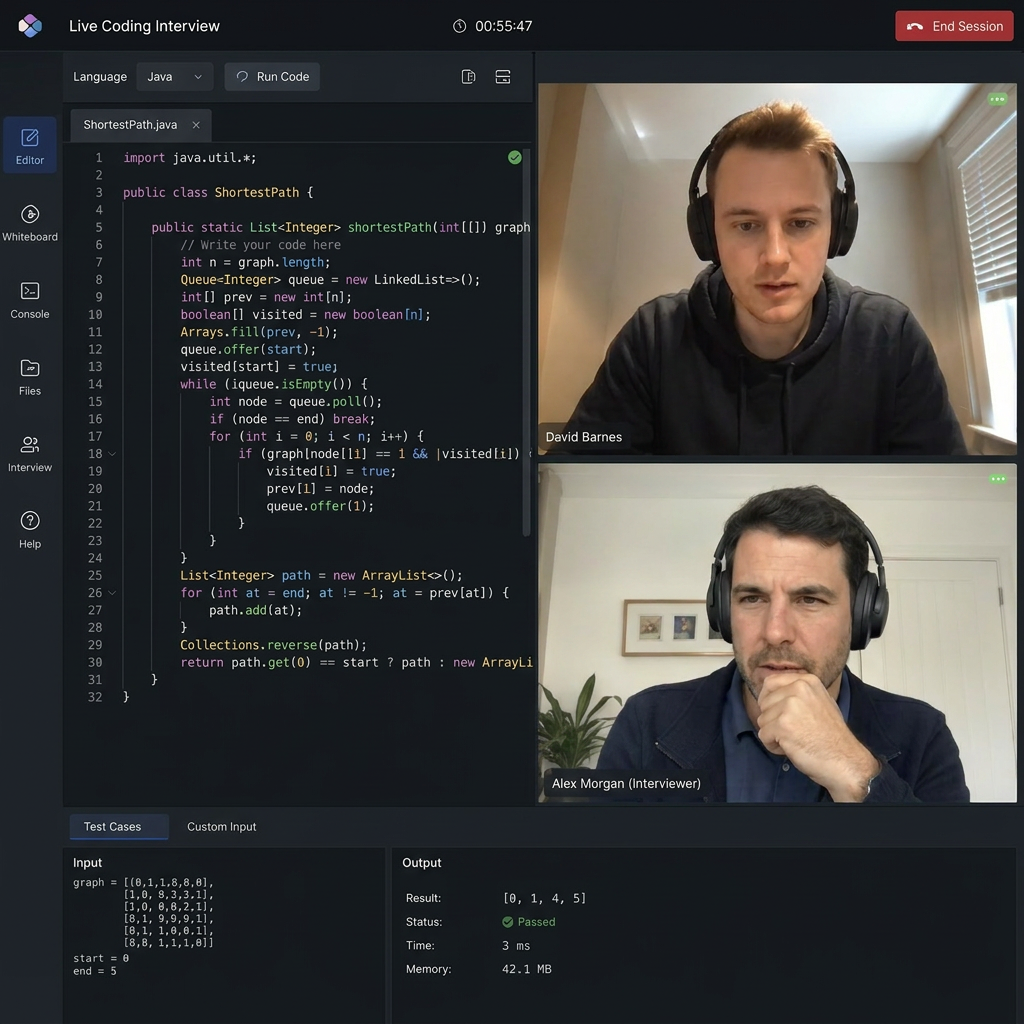
Candidates design schemas and work real modelling problems live with a senior engineer during CTO-led vetting, then pass a cultural fit screen and our psychometric assessment for software engineers. Tools can generate a resolver; deciding what belongs in the graph is the skill we hire for.
Onboarding and HR handled by us


The alternative
Solid lime = yes · outline lime = partial · grey dash = no
Vetting
A senior engineer runs a live technical conversation on the candidate's real stack, not a recruiter working from a keyword list.
Real problems solved in front of an assessor, with anti-cheating checks. You see how they actually work, not what they submitted overnight.
Every candidate arrives with a CV, interview summary, coding-test breakdown and rate in pounds. You decide on evidence.
Every tab is a stage a candidate has to clear. Six of them, all run by our own internal engineers at Cloud Employee, before you see a name.
Scored by people. We use AI to cross-check our own consistency - never to decide who reaches your shortlist.
 ✓
✓Luka M.
VettedSenior Software Engineer · TypeScript · Python · Cloud · 6 yrs · Zagreb, Croatia (GMT+1)
Assessment
Six years in production Python, the last three on LLM systems - retrieval pipelines, eval suites, and agent tooling for UK fintech. Owns delivery end to end.
AI in practiceShips with Copilot and Claude Code daily, and rewrote 40% of the generated code in his observed task - the judgement is his, the tooling only makes him faster.
Career history
Senior AI Engineer
UK payments platform · 40-person product team
Built the retrieval assistant now resolving 30% of tier-1 tickets; owns its eval suite and guardrails.
Backend Engineer, Python
Travel booking SaaS · Zagreb
Moved fraud scoring onto a real-time feature pipeline; cut false declines by 18%.
Data Engineer
Agency · Python, Postgres, AWS
Technical interview
Assessed by Marco R., Principal Engineer
12 Jun 2026
55 min · live call
"Walked me through an assistant that was quietly hallucinating refund policy, how he caught it in evals, and what he got wrong on the first fix. Hire-ready for a senior seat."
Live coding test
Repair a leaking retrieval pipeline
88
score
retrieval.py · submitted diff
- hits = index.query(q, k=50)+ hits = index.query(rewrite(q), k=50, filter=tenant)+ hits = rerank(hits, q)[:8] # recall 0.62 -> 0.91+ assert_context_budget(hits, max_tokens=6000)
Psychometric · technical thinking
How he reasons under a real deadline - not a personality quiz.
Top 9%of engineers
we test
A 45-minute reasoning test, scored against the 4,000+ engineers we have already placed. Our assessors do the marking - AI only flags where our own scoring looks inconsistent.
Soft skills · working with your team
"He raised the payment edge case nobody else had spotted, in writing, two days before release."
This is what you receive - not a CV.
Ask our AI anythingWhy Cloud Employee?
Counted fully, salary, employer national insurance, pension, recruitment fees and overheads, our engineers cost 50 to 75% less than a comparable British hire. The contract rolls monthly with 30 days notice, a two-week money-back guarantee covers the start, and a UK-based client success manager stays involved.

Fully supported
 Performance reviews
 Payroll & complianceEquipment
 Workspace
In-house, without the friction
Ready to find your engineer?
Two matched engineers in 7 days. No fees, no obligation.
Pick one to start - you'll see matching engineers at the end.
Got questions?
The saving is typically 50 to 75% against a comparable British hire once salary, employer national insurance, pension, recruitment fees and overheads are totalled. UK-based GraphQL engineers are something we place. What tends to decide it is the quality-to-cost ratio, which usually favours Eastern Europe, the Philippines or Latin America, and Eastern Europe works well for British teams at about an hour from London. GraphQL work in Britain tends to be done by senior backend engineers with API design experience, and that seniority is what you pay for locally. A two-week money-back guarantee and free replacement cover the match.
GraphQL is a query language for APIs that lets clients ask for exactly the data they need in one request, instead of stitching together fixed REST endpoints. Teams adopt it when many clients with different needs, web, mobile, partners, sit on the same backend, since it removes the endless negotiation over what each endpoint returns. A typed schema becomes a contract that tooling and AI coding assistants can read and generate against. Caching gets harder than REST, and the resolver layer can hide brutal database access patterns. Adopt it for genuine client diversity, not because it is modern.
Schema design judgement is the top skill, because a GraphQL schema is a public contract, and a bad one propagates into every client that consumes it. Under it sits performance literacy, especially the N+1 problem, batching with tools like DataLoader, and knowing what each resolver really costs the database. Security thinking is specific too, query depth limits and field-level authorisation, since GraphQL exposes a larger surface than fixed endpoints. AI assistants generate resolvers and schema types fluently, so the differentiator is taste, whether the schema models your domain or mirrors your database tables.
Give a GraphQL candidate a flawed schema and ask them to critique it, because taste in schema design is the skill you are actually buying. Salt it with the classics, database tables leaked as types, missing pagination, a mutation returning nothing useful. Follow with a performance conversation, how they would find and fix an N+1 and protect the API from a careless query. Ask when they would advise against GraphQL. Let them use an AI assistant, then ask which suggestions they rejected and why, since schema work is where generated output is plausible but wrong.
GraphQL demand is solid inside product companies with multiple clients and mature engineering teams, though it never displaced REST and no longer pretends to. It shows up steadily in backend and full-stack job specifications, usually as one expected competence among several. Federation keeps it relevant at larger organisations, acting as a composition layer over many services. It has found a modest new role in the AI wave too, a typed schema is machine-readable, making GraphQL APIs pleasant for agents. Worth building on when client diversity is a live problem, otherwise REST serves just as well.
Yes, our developers use AI assistants for GraphQL work, and the schema-first nature of the technology is actually a help in keeping the output sound. A typed schema gives generated code something to check against, and our engineers design the contract before any assistant fills in resolvers. Soundness rests on habits we vet for, reviewing generated data access for hidden N+1s and testing authorisation at field level, since those are the failures assistants introduce most readily. Every candidate is assessed on whether they use AI tooling well. We apply the same rule ourselves, a human decides.
Vetting is CTO-led and four stages long, and for GraphQL developers it is tuned to expose whether schema thinking is real or borrowed. Candidates take a technical assessment, then pair program live with a senior engineer who brings API design problems and watches how they reason about contracts and cost. A cultural fit screen and our own psychometric assessment complete the process. We use AI across screening and matching data, but the hiring decision stays human. Matched candidates interview within 7 working days and are embedded in two weeks, and retention runs at 97% beyond two years.
You are typically interviewing matched candidates within 7 working days of a requirements call, and developers are often embedded and pushing code within about two weeks. From there it is a rolling monthly contract with 30 days' notice, one monthly fee, and no placement charges. You can scale up or down as the work changes, and you pay nothing to interview.
There is a two-week money-back guarantee, and if you want to continue we replace the developer free of charge. In practice this rarely comes up, because you interview a shortlist of two candidates who have already passed a CTO-led technical assessment and a live pair programming session, so the fit question is largely settled before anyone starts.
Proof, not promises
In their words
Our new developers were able to hit the ground running, we've worked with them for over two years now, and they are truly part of our team.
Alison WhittleProduct Delivery Manager, BladeFSWhat I love about Cloud Employee is that you have taken all of that hard work off my shoulders.
 Marcus KilgourCTO, Salmon Software
Working with Cloud Employee developers is great, because they're not afraid to push back. They're proactive, they're positive, and they feel like part of the team.
 Doran EskinaziHead of Engineering, Healthpointe
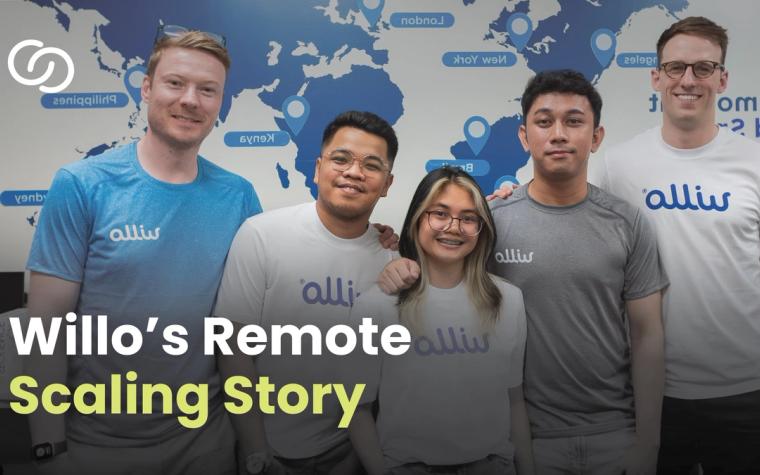
We actually hired the whole team remotely, having never met them. And we made a bunch of really good hires.
 Euan CameronCEO, Willo
Cloud Employee provides a level of professionalism, communication and support we haven't found elsewhere.
 Trevor SathorManaging Director, Square Eye
Working in tandem with Cloud Employee we have successfully released a major version of our main software product during a critical period for us.
 James StringerManaging Director, CleanLink