
















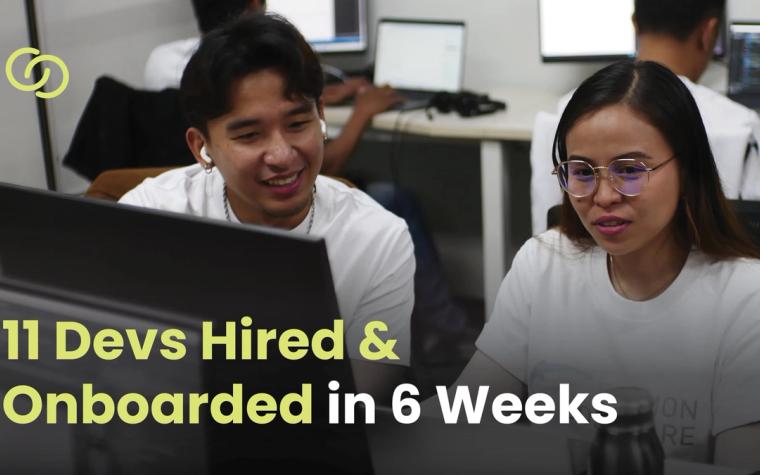
Our new developers were able to hit the ground running, we've worked with them for over two years now, and they are truly part of our team.
 Alison WhittleProduct Delivery Manager, BladeFS
In-house feel, nearshore
Every British firm suddenly wants LLM features, and the pool of engineers who have actually shipped them is thin, which is exactly when hiring mistakes get expensive. We embed LangChain developers who have built agents, chains and retrieval in production, working your hours as full-time employees of ours.
 LLM IntegrationRAG & SearchPrompt OptimizationModel EvaluationDeployment Ready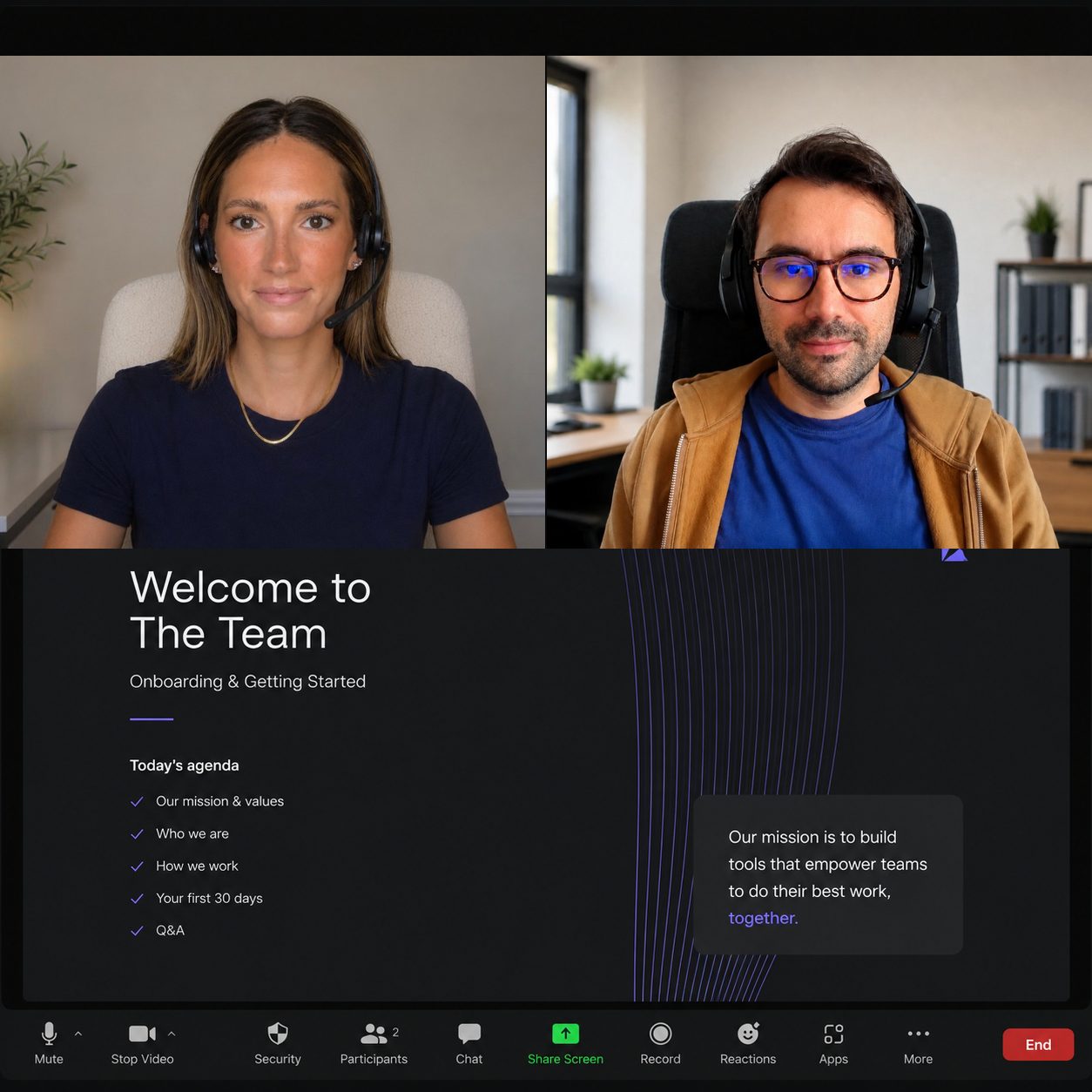
Our Service
You set the roadmap and manage the work; we handle sourcing, employment and retention. Matched candidates are in front of you within seven working days, and because we test whether engineers use AI tooling well, you get people who treat models as components rather than magic.
Vetted employees, never freelancers


The alternative
Solid lime = yes · outline lime = partial · grey dash = no
Vetting
A senior engineer runs a live technical conversation on the candidate's real stack, not a recruiter working from a keyword list.
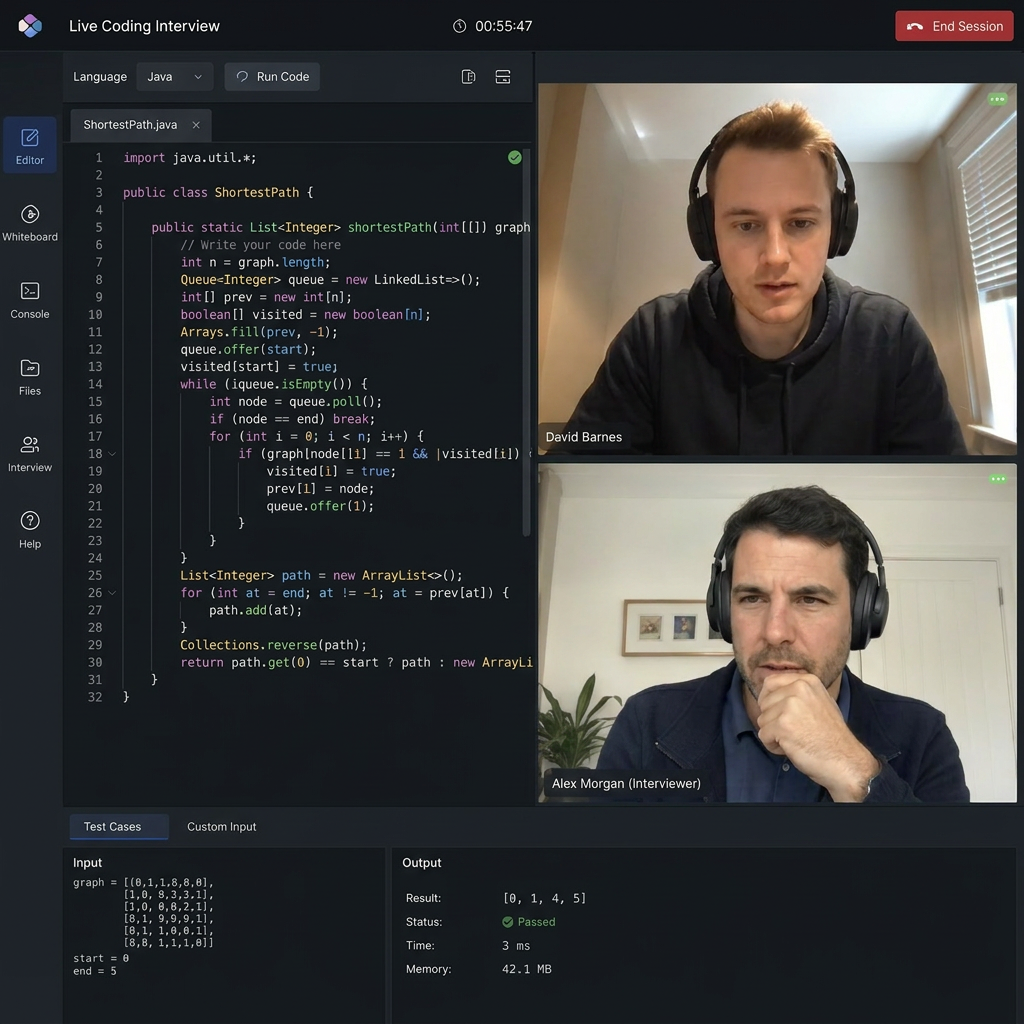
Real problems solved in front of an assessor, with anti-cheating checks. You see how they actually work, not what they submitted overnight.
Every candidate arrives with a CV, interview summary, coding-test breakdown and rate in pounds. You decide on evidence.
Every tab is a stage a candidate has to clear. Six of them, all run by our own internal engineers at Cloud Employee, before you see a name.
Scored by people. We use AI to cross-check our own consistency - never to decide who reaches your shortlist.
 ✓
✓Luka M.
VettedSenior AI Engineer · Python · LLM systems · RAG · 6 yrs · Zagreb, Croatia (GMT+1)
Assessment
Six years in production Python, the last three on LLM systems - retrieval pipelines, eval suites, and agent tooling for UK fintech. Owns delivery end to end.
AI in practiceShips with Copilot and Claude Code daily, and rewrote 40% of the generated code in his observed task - the judgement is his, the tooling only makes him faster.
Career history
Senior AI Engineer
UK payments platform · 40-person product team
Built the retrieval assistant now resolving 30% of tier-1 tickets; owns its eval suite and guardrails.
Backend Engineer, Python
Travel booking SaaS · Zagreb
Moved fraud scoring onto a real-time feature pipeline; cut false declines by 18%.
Data Engineer
Agency · Python, Postgres, AWS
Technical interview
Assessed by Marco R., Principal Engineer
12 Jun 2026
55 min · live call
"Walked me through an assistant that was quietly hallucinating refund policy, how he caught it in evals, and what he got wrong on the first fix. Hire-ready for a senior seat."
Live coding test
Repair a leaking retrieval pipeline
88
score
retrieval.py · submitted diff
- hits = index.query(q, k=50)+ hits = index.query(rewrite(q), k=50, filter=tenant)+ hits = rerank(hits, q)[:8] # recall 0.62 -> 0.91+ assert_context_budget(hits, max_tokens=6000)
Psychometric · technical thinking
How he reasons under a real deadline - not a personality quiz.
Top 9%of engineers
we test
A 45-minute reasoning test, scored against the 4,000+ engineers we have already placed. Our assessors do the marking - AI only flags where our own scoring looks inconsistent.
Soft skills · working with your team
"He raised the payment edge case nobody else had spotted, in writing, two days before release."
This is what you receive - not a CV.
Ask our AI anythingWhy Cloud Employee?
AI has made producing code cheap, so what we vet for is the judgement to know when a chain is over-engineered or a retrieval step is quietly wrong. Vetting is CTO-led with live pair programming, and the engagement carries a two-week money-back guarantee plus free replacement if the fit is off.

The operation behind the engineer
Fully supported
 Performance reviews
 Payroll & complianceEquipment
 Workspace
In-house, without the friction
Ready to find your engineer?
Two matched engineers in 7 days. No fees, no obligation.
Pick one to start - you'll see matching engineers at the end.
Got questions?
In most cases 50 to 75% less than employing a comparable British developer, counting salary, employer national insurance, pension, recruitment fees and overheads. We place UK-based LangChain engineers as readily as anywhere else. Where most clients arrive is Eastern Europe, the Philippines or Latin America, because the engineers are just as strong and the cost is considerably lower, with Eastern Europe sharing nearly all of your working day. LangChain is new enough that almost nobody in Britain has years of it, the few with substantial production experience can more or less name their price.
LangChain is an open-source framework for building applications on top of large language models, providing the plumbing for prompts, tool calls, memory, agents and retrieval. Teams use it to move faster than raw API calls allow, standardising the patterns everyone rebuilds anyway, chaining steps and giving an LLM tools it can call. The ecosystem around it, including tracing and evaluation tooling, addresses the real production problem, knowing what your system actually did. The abstractions can obscure simple API calls, and for a single-prompt feature you may not need it. It earns its keep in multi-step, retrieval-heavy systems.
The core skill is evaluation, because anyone can chain LLM calls together and almost nobody can prove their chain works. Look for engineers who build test sets, trace failures through multi-step pipelines and measure quality in terms tied to your task, not vibes. Under that sits retrieval literacy, chunking, embeddings, hybrid search, since most LangChain systems are retrieval systems at heart. Framework fluency is the least durable skill, so favour candidates who understand the concepts beneath. Cost and latency judgement round it out, and syntax is cheap now, the value is judgement about whether the system should exist.
Ask a LangChain candidate to debug a misbehaving pipeline, because production LLM work is mostly diagnosis, not greenfield chaining. Describe a real failure, an agent that loops, a retrieval answer citing the wrong document, and ask how they would isolate the cause, listening for tracing rather than prompt-tweaking folklore. Ask what they would build without LangChain, a candidate who cannot describe the raw API version does not understand what the framework is doing. Have them critique a past system of their own, strong engineers volunteer failure modes. Watch whether they verify AI tooling's output throughout the exercise.
Demand for LangChain developers is high and noisy, riding the wave of companies turning LLM prototypes into products, and it needs a careful reading. The underlying demand, engineers who can build reliable systems on unreliable models, is real and durable. The framework itself is a moving target where the current default can become legacy quickly, so build on the skills rather than the brand, retrieval and orchestration judgement. It is worth investing when an LLM feature is moving toward your product's centre. If ambitions are still exploratory, a strong generalist may serve better and cost less.
Yes, thoroughly, and in this field the question folds in on itself, because the product is AI and the tooling is AI, so verification is the whole discipline. Our LangChain developers treat generated code the way they treat model output, as a draft to be tested, and soundness comes from evaluation harnesses and regression sets rather than optimism. A plausible demo and a reliable system look most alike here, which is why we weight verification habits heavily in vetting, watching live how candidates check what their chains produce. Our own hiring runs on the same rule, human decisions.
We vet LangChain developers through the same CTO-led process as every engineer, four stages, with extra weight on evaluation habits, because LLM work punishes wishful thinking. Candidates complete a technical assessment, pair program live with a senior engineer on realistic LLM problems, then pass a cultural fit screen and our psychometric assessment. Pairing shows us whether they measure their systems or merely believe in them. Screening uses AI across candidate data, decisions do not, a person makes each one. Matched candidates interview within 7 working days, and 97% stay beyond two years.
You are typically interviewing matched candidates within 7 working days of a requirements call, and developers are often embedded and pushing code within about two weeks. From there it is a rolling monthly contract with 30 days' notice, one monthly fee, and no placement charges. You can scale up or down as the work changes, and you pay nothing to interview.
There is a two-week money-back guarantee, and if you want to continue we replace the developer free of charge. In practice this rarely comes up, because you interview a shortlist of two candidates who have already passed a CTO-led technical assessment and a live pair programming session, so the fit question is largely settled before anyone starts.
Proof, not promises
In their words
Our new developers were able to hit the ground running, we've worked with them for over two years now, and they are truly part of our team.
Alison WhittleProduct Delivery Manager, BladeFSWhat I love about Cloud Employee is that you have taken all of that hard work off my shoulders.
 Marcus KilgourCTO, Salmon Software
Working with Cloud Employee developers is great, because they're not afraid to push back. They're proactive, they're positive, and they feel like part of the team.
 Doran EskinaziHead of Engineering, Healthpointe
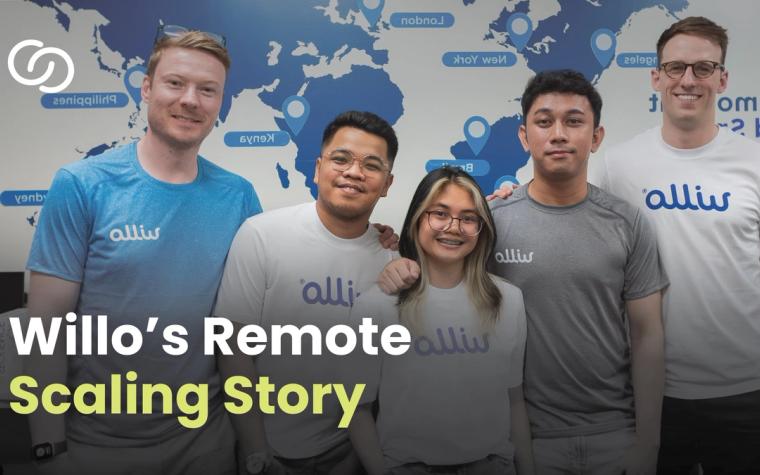
We actually hired the whole team remotely, having never met them. And we made a bunch of really good hires.
 Euan CameronCEO, Willo
Cloud Employee provides a level of professionalism, communication and support we haven't found elsewhere.
 Trevor SathorManaging Director, Square Eye
Working in tandem with Cloud Employee we have successfully released a major version of our main software product during a critical period for us.
 James StringerManaging Director, CleanLink