






Staff Augmentation Spotlight: How It Stacks Up Against Consulting, Outsourcing & Managed Services
Why leaders are switching models
Hiring for product velocity is challenging: demand outpaces supply, cycles are shorter, and release risk is real. That’s why more CTOs now compare staff augmentation vs consulting, vs outsourcing, and vs managed services before they commit.
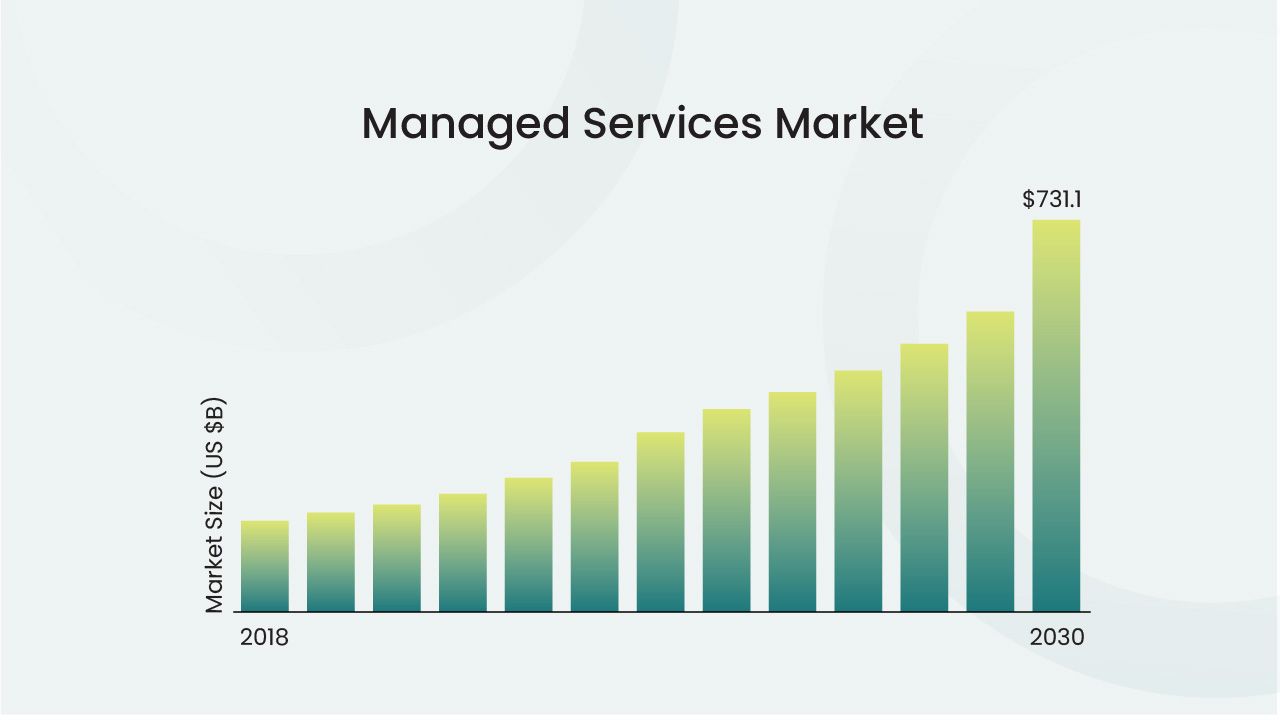
Market signals back the shift: IT outsourcing and managed services continue to grow steadily worldwide, pointing to sustained demand for flexible delivery - while companies want more control and transparency than classical vendor models typically provide.
For context: analysts peg the IT outsourcing market in the hundreds of billions and growing through 2030; managed services are projected to expand at double‑digit CAGRs this decade (Grand View Research).
The companies that win in the next decade will be those that master the balance of speed, cost, and quality in building teams. Staff augmentation is becoming the bridge between agility and scale.
Seb Hall
CEO at Cloud Employee
Definitions at a glance
Staff augmentation (aka resource augmentation, workforce augmentation, talent augmentation).
A staff augmentation model adds external, vetted talent directly into your team-your tools, your ceremonies, your roadmap-without adding permanent headcount. It’s execution power under your management, ideal for agile staff augmentation of feature squads, QA pods, or DevOps.
Consulting model.
Advisory‑led expertise: strategy, assessments, roadmaps, business cases, operating models. Consultants guide the “what” and the “why”; internal or external teams execute the “how.”
Outsourcing model.
You contract a vendor to deliver an entire project or function. Scope, team, and process owned by the vendor. This includes IT outsourcing (e.g., application development, infrastructure) and project outsourcing (fixed deliverables).
Managed services.
You outsource ongoing responsibility for a defined function (e.g., cloud ops, security monitoring) to a provider with SLAs. The vendor manages process, tooling, staffing, and risk.
Staff augmentation vs consulting: execution vs perspective
Short answer: Consulting brings the strategic lens; staff augmentation brings immediate hands-on delivery.
| Aspect | Staff augmentation | Consulting |
|---|---|---|
| Primary role | Execution & delivery | Strategy & advice |
| Integration | Embedded in your team, knowledge retained | External advisory, often costly |
| Contracting | Flexible, role-based | Project/retainer |
| Time to impact | Days–weeks (fast time to hire) | Weeks–months |
Choose consulting for market entry, compliance frameworks, or platform strategy.
Choose staff augmentation when the roadmap is clear and you need senior engineers, QA, or DevOps now to hit dates.
Staff augmentation vs outsourcing (incl. IT & project outsourcing)
Short answer: Outsourcing hands over scope and control; staff augmentation keeps control in‑house while adding capacity.
| Aspect | Staff augmentation | Outsourcing |
|---|---|---|
| Who manages work | You | Vendor |
| Flexibility | Scale up/down quickly | Change requests & re-scoping |
| Visibility | Real-time (your boards) | Periodic reporting |
| Focus | Specific roles/skills | End-to-end functions/projects |
Real‑world example:Event Connections chose Cloud Employee’s augmentation to keep culture, code standards, and IP control internal while scaling delivery - rather than handing off the whole project.
Staff augmentation vs managed services
Short answer: Managed services own a stable function under SLAs; staff augmentation is best when work evolves sprint‑to‑sprint.
| Aspect | Staff augmentation | Managed services |
|---|---|---|
| Control | Client retains control | Vendor runs the function |
| Scope | Roles/skills | Outcomes/SLAs |
| Best for | Dynamic product work | Predictable operations |
| Risk ownership | Client | Vendor |
Managed services are great for steady‑state IT (e.g., patching, monitoring). Agile staff augmentation shines for product delivery, where priorities shift and team composition must flex.
Benefits of staff augmentation (why it wins for scaling engineering teams)
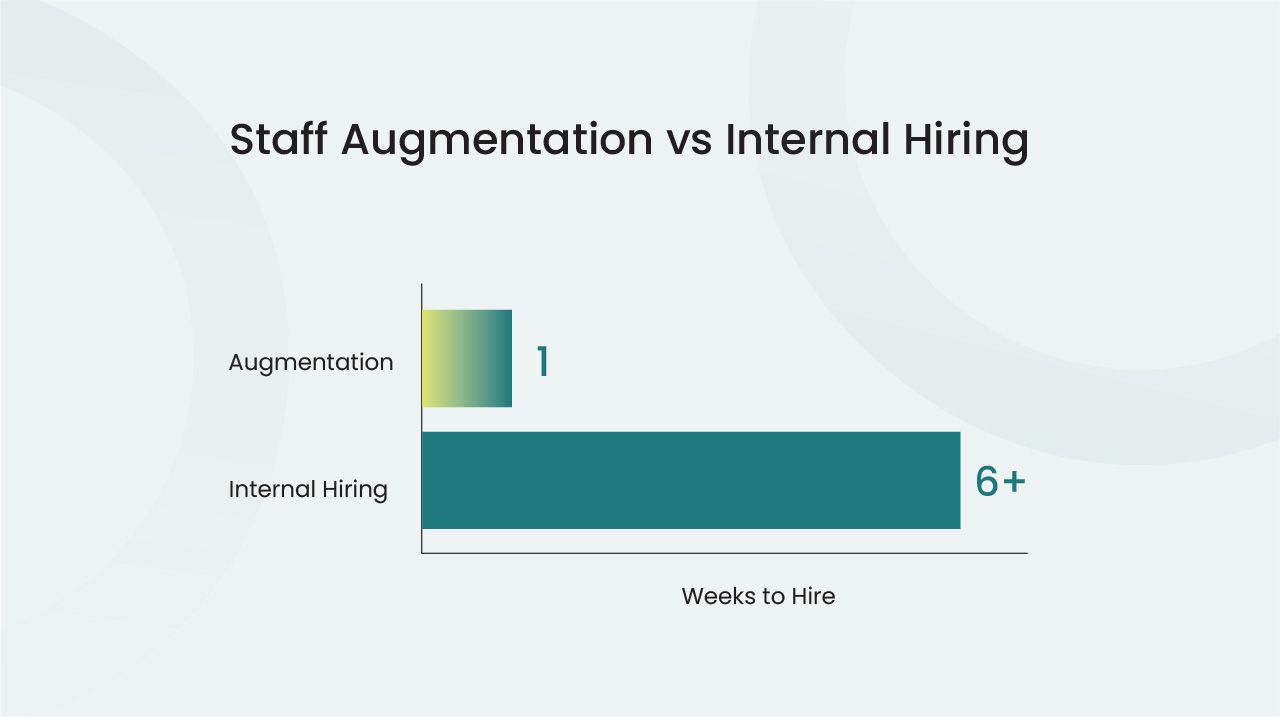
- Speed & time to hire. Typical internal hiring can take 5–6+ weeks for engineering roles; augmentation compresses that to days or a few weeks by tapping pre‑vetted talent.
- Cost reduction without quality loss. Access nearshore/offshore markets to optimize run‑rate vs permanent headcount.
- Risk reduction. Scale up for a release; scale down after. Minimize long‑term commitments.
- Staff retention & team health. Keep tribal knowledge in your org; augmented engineers work your stack and rituals, retaining knowledge, and supporting staff retention by reducing burnout on core teams.
- Cultural continuity. Unlike outsourcing, augmented staff adopt your engineering playbook, your definition of done, code review standards, and security gates.
Run the numbers yourself: try the Cloud Employee Pricing Calculator to model monthly rates and team mixes.
Examples of staff augmentation (what good looks like):
- Feature squads: Add 2–4 full‑stack engineers to accelerate a payments, data, or mobile track.
- Assurance pods: Spin up dedicated QA automation to lift coverage without slowing feature throughput.
- Platform enablement: Drop in senior DevOps to harden CI/CD, IaC, observability.
- Specialist infill: Short‑term ML, security, or performance tuning expertise to de‑risk a release.
Case study snippet:Salmon Software scaled engineering capacity rapidly with Cloud Employee, maintaining product velocity through a critical roadmap window, without diluting code quality (ask us for the full playbook).
Hiring considerations (so your augmentation program actually works)
- Define outcomes clearly. Staff augmentation isn’t “more hands”, it’s targeted, measurable impact on throughput, quality, or reliability.
- Onboarding SOPs. Use a proven process for environment access, coding standards, security policies, and feedback loops. You can borrow ours: Cloud Employee Internal Hiring SOP.
- Time zone design. Aim for 4+ hours overlap for ceremonies and pairing; use async tools to cover the rest.
- Guardrails. Keep sensitive prod access on least‑privilege; document architectural decisions to contain risk.
- Retention mindset. Treat augmented engineers as teammates. That means recognition, retros, clear growth paths, so you keep continuity beyond a single release.
Quick model chooser (one‑minute guide)
- You’re defining strategyor target architecture? → Consulting model
- You want to hand off a whole function or fixed deliverable? → Outsourcing model (incl. IT outsourcing / project outsourcing)
- You need predictable, always‑on ops with SLAs? → Managed services
- You’re building a software development team fast and want control? → Staff augmentation model
Why this is the future of work
The macro trend is persistent: businesses want speed, transparency, and control while still leveraging global talent pools. Analyst outlooks show long‑run growth in both IT outsourcing and managed services, but leadership teams increasingly expect vendor models that integrate deeply with internal ways of working.
Staff augmentation is that integration‑first model, sitting between hiring and outsourcing, built for scaling teams without locking into inflexible scope (Mordor Intelligence).
Cloud Employee is purpose‑built for this reality: vetted engineers, agile staff augmentation, clean onboarding, and long‑term team continuity.
Next steps
- Compare options vs freelancers: Freelancers vs Cloud Employee
- Download our process: Internal Hiring SOP
- Price a dev team: Pricing Calculator
FAQs
What’s the simplest difference between staff augmentation vs consulting?
Consulting advises on strategy; staff augmentation executes inside your team.
Staff augmentation vs outsourcing - when should I choose each?
Choose outsourcing to hand off a defined project/function; choose augmentation when you want control and need to scale engineering teams quickly.
Is staff augmentation part of managed services?
No. Managed services run a stable function under SLAs; augmentation adds people into your workflows to deliver outcomes.
What are concrete examples of staff augmentation?
Add full‑stack devs to a feature squad, QA to boost automation, or DevOps to accelerate CI/CD - without permanent headcount.
Top benefits of staff augmentation?
Faster time to hire, cost reduction, risk reduction, cultural continuity, and better staff retention through balanced workloads.